Thinking Maps: A Comprehensive Guide & PDF Resources (Updated 05/04/2026)
Today‚ May 4th‚ 2026‚ explore readily available printable templates and digital resources designed to enhance learning through visual organization and structured thinking processes.
What are Thinking Maps?
Thinking Maps are visual learning tools that employ eight distinct map types‚ each corresponding to a fundamental thinking process. These aren’t simply brainstorming tools; they are specifically designed to externalize thinking‚ making it visible and therefore more manageable.
Concept maps‚ often utilized by nursing students‚ share similarities‚ bridging theoretical medical knowledge with real-world patient care scenarios. These maps integrate complex subjects like anatomy‚ physiology‚ and pathology.
While often created digitally using software like Visio‚ Word‚ or Canva for Education‚ the core principle remains the same: to visually represent thought. The availability of PDF resources‚ including free printable templates‚ allows for offline use and accessibility. These maps aid in pre-writing activities‚ helping visualize drafts before composition‚ and are invaluable for structuring ideas.
Essentially‚ Thinking Maps provide a common visual language for thinking‚ fostering clarity and deeper understanding across various disciplines.
The Eight Types of Thinking Maps
Thinking Maps consist of eight visually distinct maps‚ each designed to support a specific cognitive skill. While detailed explanations of each map follow‚ understanding their collective purpose is key. Numerous PDF resources offer templates for each type‚ facilitating practical application.
These maps aren’t limited to academic settings; they’re adaptable for professional development‚ including fields like nursing‚ where concept mapping aids in complex knowledge integration. Digital tools like Visio‚ Word‚ and Canva for Education provide avenues for creating these maps‚ but printable PDF versions offer accessibility and flexibility.
The maps support defining‚ describing‚ comparing‚ classifying‚ analyzing parts‚ sequencing‚ showing cause and effect‚ and seeing analogies. Accessing pre-designed PDF templates streamlines the process‚ allowing users to focus on the thinking itself‚ rather than the map’s construction.
Circle Map: Defining in Context
The Circle Map is the foundational Thinking Map‚ used for defining concepts or ideas. Its central circle holds the main idea‚ surrounded by relevant information and context. Numerous PDF templates are available online‚ offering pre-formatted circles and guiding prompts to facilitate brainstorming.
These PDF resources are particularly useful for students learning to articulate definitions and understand relationships between concepts. In fields like nursing‚ a Circle Map can define a disease or medical term‚ linking it to associated symptoms and treatments; Utilizing a printable PDF allows for collaborative work and easy annotation.
Digital tools like Visio and Canva also support Circle Map creation‚ but the simplicity of a PDF template makes it ideal for quick concept exploration and initial idea generation. It’s a powerful tool for pre-writing activities‚ visualizing thoughts before drafting.

Bubble Map: Describing Qualities
The Bubble Map excels at describing qualities using adjectives and descriptive phrases. The central bubble contains the noun‚ with surrounding bubbles detailing its attributes. Convenient PDF templates streamline this process‚ providing pre-drawn bubbles and space for detailed descriptions.
These PDF resources are invaluable for students developing descriptive writing skills and expanding their vocabulary. In nursing education‚ a Bubble Map can characterize a patient’s condition or a medication’s effects. Printable PDF versions encourage active participation and personalized learning.
While tools like Microsoft Word and Canva offer digital Bubble Map creation‚ the accessibility of a PDF template allows for quick brainstorming and offline use. It’s a fantastic pre-writing tool‚ helping visualize characteristics before composing a detailed description.
Double Bubble Map: Comparing and Contrasting
The Double Bubble Map is specifically designed for comparing and contrasting two concepts. Two central bubbles represent the items being compared‚ with overlapping sections highlighting similarities and outer sections detailing differences. Numerous PDF templates offer pre-formatted layouts for efficient analysis.
These PDF resources are particularly useful in nursing education‚ allowing students to compare diseases‚ treatments‚ or patient presentations. Printable PDF versions facilitate collaborative work and detailed note-taking. Digital tools like Visio and Canva can also create these maps‚ but PDFs offer immediate usability.
Utilizing a PDF Double Bubble Map streamlines the process of identifying key distinctions and commonalities‚ enhancing critical thinking skills. It’s a powerful tool for pre-writing activities‚ organizing thoughts before drafting comparative essays or reports.
Tree Map: Classifying and Grouping
The Tree Map excels at visually organizing information into hierarchical categories. Starting with a main idea as the “trunk‚” branches extend to represent broader classifications‚ with sub-branches detailing specific examples. Convenient PDF templates provide pre-designed structures for efficient categorization.
In fields like nursing‚ Tree Maps‚ often found as downloadable PDFs‚ can classify diseases by type‚ symptoms‚ or treatment approaches. These PDF resources support structured learning and knowledge retention. Tools like Microsoft Word and Canva can create these maps‚ but PDFs offer portability and ease of printing.
Using a PDF Tree Map fosters analytical skills by forcing a clear hierarchical breakdown of complex information. It’s ideal for brainstorming‚ outlining‚ and organizing ideas before writing or presenting‚ offering a clear visual framework.
Brace Map: Part-Whole Relationships
The Brace Map visually demonstrates how individual components contribute to an overall whole. It’s structured with a central “brace” representing the main concept‚ with branches extending to show its constituent parts. Numerous PDF templates are available‚ offering pre-formatted layouts for various subjects;
Within nursing education‚ a Brace Map – often accessible as a downloadable PDF – can illustrate the parts of a human organ system and their functions. These PDF resources aid in understanding complex anatomical relationships. While digital tools like Visio and Canva facilitate creation‚ PDF versions ensure easy sharing and printing.

Utilizing a PDF Brace Map enhances comprehension by highlighting interconnectedness. It’s particularly useful for dissecting complex systems and understanding how each element plays a vital role in the overall function.
Flow Map: Sequencing and Ordering
The Flow Map excels at illustrating processes with a clear beginning‚ middle‚ and end. Represented as a series of boxes connected by arrows‚ it visually depicts sequential steps. Conveniently‚ many PDF templates are readily available online‚ offering pre-designed structures for diverse applications.
In nursing education‚ a Flow Map – often found as a downloadable PDF – can chart the stages of a medical procedure or a patient’s care pathway. These PDF resources help students grasp the correct order of actions. While tools like Microsoft Word and Canva allow for creation‚ PDF formats ensure portability and consistent presentation.
Leveraging a PDF Flow Map promotes understanding of chronological order and process logic. It’s invaluable for tasks requiring step-by-step analysis and clear sequencing of events.
Multi-Flow Map: Cause and Effect
The Multi-Flow Map is a powerful tool for dissecting complex relationships‚ specifically those involving multiple causes leading to multiple effects. Often available as a downloadable PDF‚ it utilizes boxes and arrows to visually represent these interconnected factors. These PDF templates streamline the process of analyzing intricate scenarios.
Within nursing education‚ a Multi-Flow Map – easily accessed as a PDF – can illustrate the various causes contributing to a patient’s condition and the subsequent effects of different interventions. Students benefit from pre-made PDF structures‚ focusing on analysis rather than formatting.
Utilizing a PDF version ensures consistent presentation and easy sharing. While digital tools exist‚ the convenience of a pre-designed PDF simplifies complex cause-and-effect analysis.
Bridge Map: Seeing Analogies
The Bridge Map excels at illustrating analogies and proportional relationships‚ revealing connections between seemingly disparate concepts. Conveniently available as a PDF download‚ it employs a specific format: “A is to B as C is to D.” This structure fosters critical thinking and deeper understanding.
PDF templates for Bridge Maps provide a pre-formatted layout‚ allowing students to concentrate on identifying the relationships rather than struggling with design. These PDF resources are particularly useful in subjects requiring comparative analysis.
In educational settings‚ a Bridge Map PDF can help students grasp abstract concepts by relating them to familiar ones. The clarity of a PDF format ensures easy comprehension and application of analogical reasoning. Utilizing these PDFs promotes a structured approach to problem-solving.

Thinking Maps in Education
PDF resources empower educators with accessible visual tools‚ fostering student engagement and comprehension across diverse subjects‚ enhancing learning outcomes effectively.
Benefits of Using Thinking Maps for Students
Thinking Maps‚ often accessed as PDF templates‚ offer significant cognitive advantages for students. These visual tools bridge complex concepts with practical application‚ particularly valuable in fields like nursing education where integrating anatomy‚ physiology‚ and patient care is crucial.
Utilizing these maps enhances brainstorming and idea capture‚ allowing students to visualize their thoughts before drafting written work. The structured format promotes critical thinking skills‚ enabling students to analyze information‚ identify relationships‚ and solve problems more effectively.

PDF versions provide readily available‚ printable resources for in-class activities or homework assignments. They support diverse learning styles‚ catering to visual learners and those who benefit from organized information presentation. Furthermore‚ they foster collaboration and communication as students share and discuss their mapped ideas.
Thinking Maps and Nursing Education
Thinking Maps‚ frequently utilized as downloadable PDF resources‚ are proving invaluable in modern nursing education. Students leverage concept maps and structured templates to effectively connect intricate medical knowledge with real-world patient care scenarios.
These visual tools facilitate the integration of core subjects – anatomy‚ physiology‚ pathology – with the practical demands of clinical practice. PDF templates offer a standardized format for organizing patient data‚ treatment plans‚ and potential complications‚ enhancing clarity and reducing errors.
The ability to visually represent complex relationships aids in critical thinking and clinical decision-making. Students can map out cause-and-effect relationships‚ compare and contrast diagnoses‚ and sequence care steps‚ ultimately improving patient outcomes. Accessible PDF versions ensure consistent application across learning environments.
Creating Thinking Maps: Tools & Techniques
Numerous digital tools facilitate the creation of Thinking Maps‚ often exportable as PDF documents for easy sharing and printing. Software like Visio offers robust features for mind mapping‚ allowing users to construct high-quality visual representations of ideas and relationships. Tutorials demonstrate how to leverage Visio’s capabilities for detailed map creation.
Microsoft Word also provides accessible tools for building simple mind maps‚ offering customization options to suit individual project needs. These maps‚ readily saved as PDFs‚ are ideal for pre-writing activities and visualizing rough drafts.
Canva for Education presents another user-friendly platform‚ enabling educators and students to design visually engaging mind maps. The resulting creations can be downloaded as PDFs‚ supporting collaborative learning and streamlined workflows.
Using Visio for Mind Mapping (and Thinking Maps)
Visio stands as a powerful software solution for constructing detailed and visually rich mind maps‚ effectively adaptable for creating Thinking Maps. A key benefit lies in its capacity to generate high-quality diagrams‚ easily saved and distributed as PDF files for seamless collaboration and archiving.

Online tutorials specifically guide users through the process of leveraging Visio’s features to build comprehensive maps. These resources demonstrate techniques for structuring information‚ utilizing shapes and connectors‚ and customizing the visual appearance to enhance clarity.
The resulting Visio-created maps‚ when exported as PDFs‚ maintain their formatting and visual integrity‚ ensuring consistent presentation across different devices and platforms. This makes Visio an excellent choice for professional-looking and shareable Thinking Maps.
Creating Thinking Maps in Microsoft Word
Microsoft Word‚ while not specifically designed for mind mapping‚ offers surprisingly robust tools for constructing Thinking Maps. Helpful tutorials demonstrate how to utilize shapes‚ lines‚ and text boxes to replicate the visual structure of various map types.
These guides focus on customizing the project‚ allowing for full control over layout and design. Users can easily create simple‚ yet effective‚ mind maps directly within Word‚ making it an accessible option for those without specialized software.
Once completed‚ Thinking Maps created in Word can be readily saved as PDF documents‚ preserving formatting and ensuring easy sharing. This method provides a convenient and cost-effective way to generate and distribute visual learning tools.
Utilizing Canva for Education – Thinking Maps
Canva for Education presents a user-friendly platform for creating visually engaging Thinking Maps. This online tool offers pre-designed templates and a vast library of graphics‚ simplifying the map-making process for educators and students alike.
Tutorials demonstrate how to construct mind maps for pre-writing activities‚ allowing users to visualize rough drafts before committing to final content. Canva’s drag-and-drop interface makes customization intuitive‚ fostering creativity and personalized learning.
Completed Thinking Maps can be easily downloaded as PDF files‚ ideal for sharing and printing. Canva’s collaborative features further enhance its utility‚ enabling students to work together on visual representations of their ideas.

Accessing Thinking Maps PDF Resources
Downloadable PDF templates provide convenient access to various Thinking Map formats‚ supporting both classroom instruction and independent student practice for enhanced learning.
Free Printable Thinking Map Templates
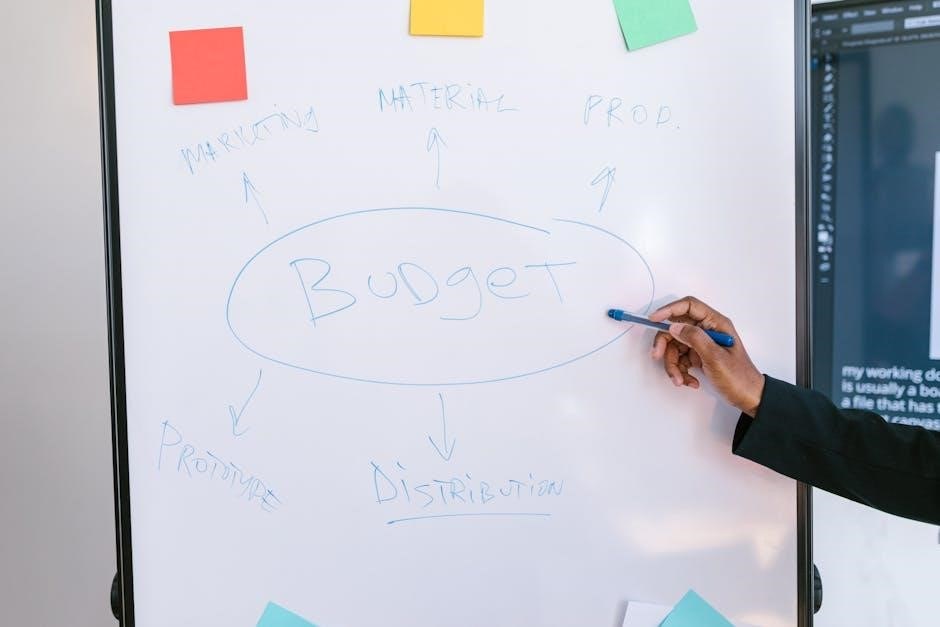
Numerous online resources offer free‚ printable Thinking Map templates‚ catering to diverse educational needs. These readily available PDFs encompass all eight map types – Circle‚ Bubble‚ Double Bubble‚ Tree‚ Brace‚ Flow‚ Multi-Flow‚ and Bridge – allowing educators and students to immediately implement visual learning strategies.
These templates facilitate brainstorming‚ concept organization‚ and critical thinking skills development. They are particularly useful for students needing structured support in outlining ideas before writing‚ or for visually representing complex information; Accessibility is key; simply download and print the desired map format‚ offering a low-tech‚ yet highly effective‚ learning tool.
Furthermore‚ these printable resources are adaptable across various subjects and grade levels‚ promoting consistent visual thinking habits. Teachers can easily integrate them into lesson plans‚ homework assignments‚ or individual student support sessions‚ fostering a more engaging and effective learning environment.